Why Property Agent Fees Cost So Much in Singapore

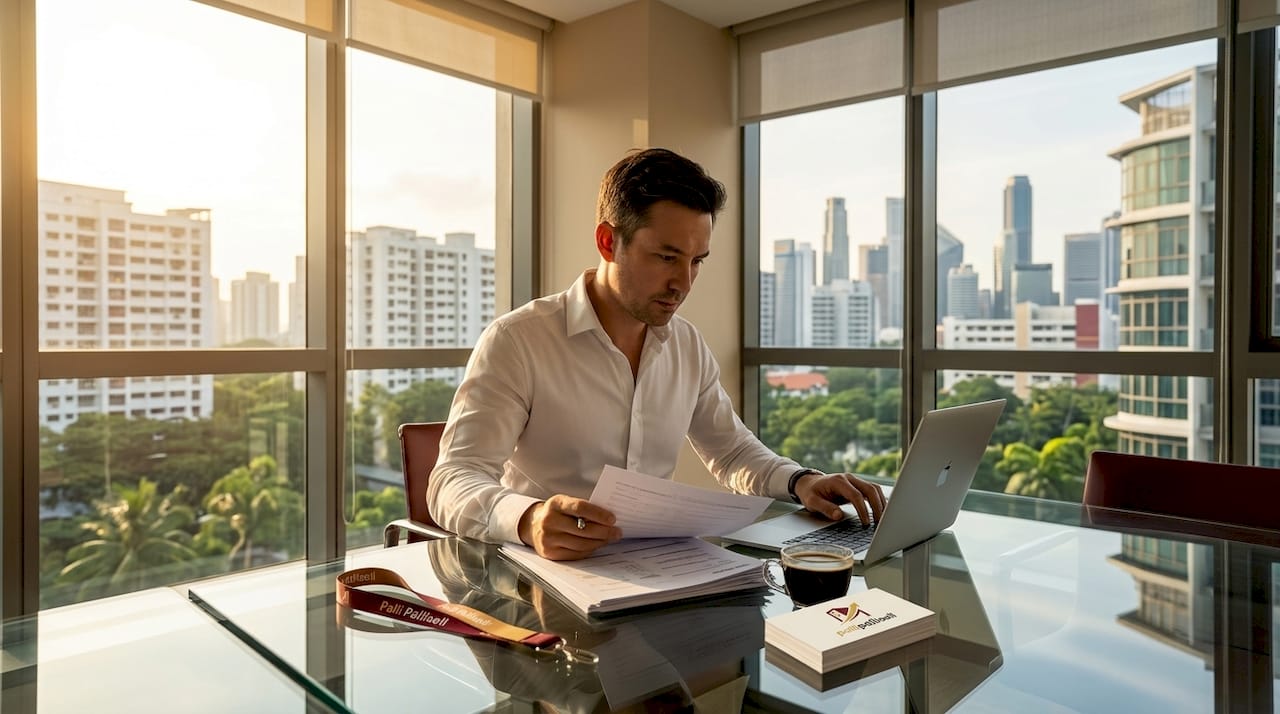
If you’ve ever gotten a commission quote from a property agent in Singapore, your first reaction was probably sticker shock. On a S$700,000 HDB flat, a 2% seller-side commission plus GST can run you past S$15,000. Understanding why property agent fees cost so much isn’t just reassuring. It’s the first step toward knowing whether you’re getting fair value, what you can negotiate, and whether a lower-cost alternative makes more sense for your situation.
Table of Contents
Key takeaways
Point | Details |
Fees are not fixed by law | Singapore commissions are market conventions; you can negotiate the percentage and scope. |
GST adds real cost | A 9% GST on commission significantly raises your total if the agency is GST-registered. |
Agents carry upfront risk | Marketing, advertising, and time costs are borne by agents before any sale is confirmed. |
Negotiating cuts service too | Lowering the commission rate often reduces the marketing and transaction support you receive. |
Flat fee options exist | Platforms like Pallipallisell offer a fixed S$688 fee, letting you sell without traditional commissions. |
How property agent fees are structured in Singapore
Many homeowners assume there is a government-set rate for agent commissions. There isn’t. Singapore commissions are market conventions, not fixed by law. The CEA and COA provide general frameworks, but actual percentages come down to negotiation and the level of service agreed upon.
Here’s how the standard fee structure breaks down across different transaction types:
Transaction type | Seller pays | Buyer pays |
HDB resale | ~2% + 9% GST | ~1% + 9% GST |
Private resale | 1–2% + 9% GST | Negotiable or none |
New launch condo | Nothing | Nothing (developer pays 2–5%) |
On a S$700,000 HDB flat, the seller’s fee reaches about S$15,260 including GST. The buyer pays roughly S$7,630 separately. That’s over S$22,000 in total commissions for a single transaction. For new launch condos, the picture is different. Developers cover agent fees directly from their marketing budgets, so buyers pay nothing out of pocket.
One cost most sellers overlook is GST. If the estate agency is GST-registered, 9% GST applies on top of the commission. On a 2% commission for a S$1.3 million private property, that adds S$2,340 to your bill. Always check whether your agent’s agency is GST-registered before signing anything.
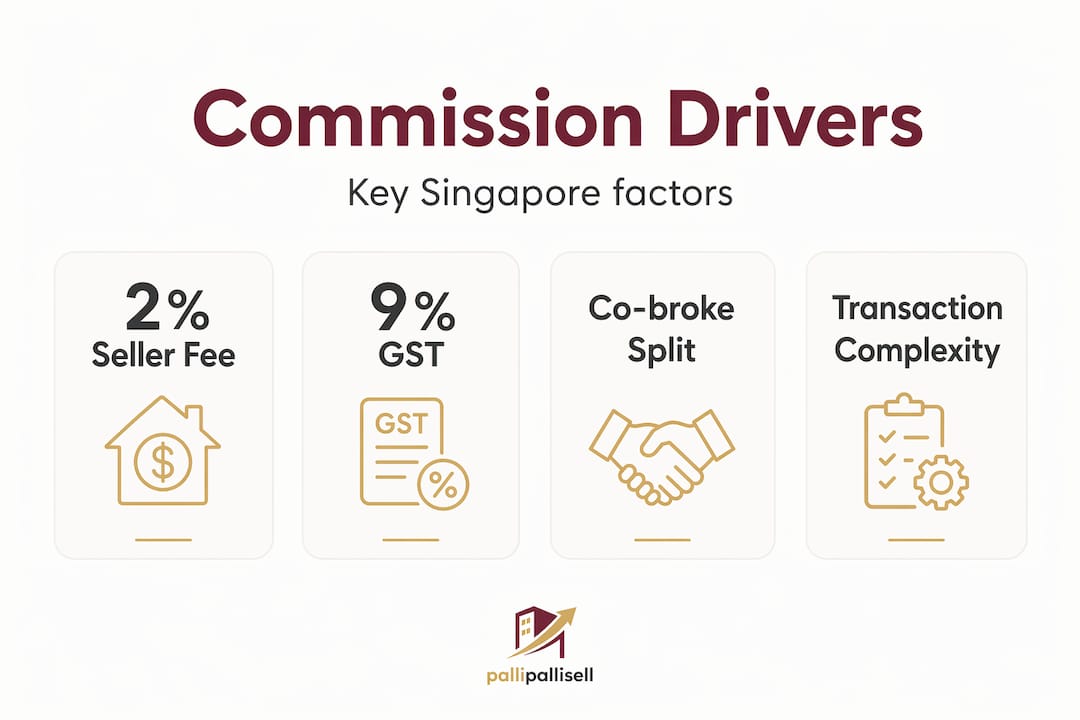
Co-broke arrangements are another cost driver. In most HDB resale deals, the listing agent splits part of the commission to compensate the buyer’s agent. Sellers typically fund both the listing and buyer agent fees through the resale transaction, which explains why the seller-side cost feels disproportionately high.
Pro Tip: Ask your agent to show you the estate agency agreement before signing. It must disclose the commission amount, any co-broke arrangement, and what services are included.
Why agents charge what they charge
The percentage model makes fees feel large because it scales directly with property prices. In markets where home values are high, commissions rise even when the actual effort stays the same. A S$600,000 HDB and a S$900,000 HDB don’t require twice the work, but the fee nearly doubles. That disconnect is at the heart of why sellers feel the structure is unfair.
But there is a real cost structure behind the commission. Here’s what agents are actually spending your fee on:
Prospecting and client acquisition. Agents spend significant hours marketing themselves before they ever meet you. That cost gets priced into every deal they close.
Advertising. Professional photography, listing portals, social media ads, and printed materials all cost money. Some agents spend S$500 to S$2,000 per listing on marketing alone.
Transaction management. Coordinating viewings, negotiating offers, handling Option to Purchase paperwork, liaising with banks and HDB, and managing the completion process takes weeks of active work.
Brokerage and team splits. Many agents work under larger agencies and give up a cut of their commission as a split fee. Some are on teams where referral fees further reduce their net payout.
Risk of no sale. If your property doesn’t sell, the agent earns nothing for months of effort.
Agents’ high fees cover time, marketing, and the risk of unsold listings. That risk element matters. When you sign with an agent, they absorb costs upfront with no guarantee of return. The commission is partly compensation for that bet.
“Commission structures have remained entrenched despite rising property prices and technological shifts that reduce search costs for buyers and sellers.” — Investopedia
That quote captures something important. Technology has made listing and finding property faster and cheaper. Yet the traditional percentage model hasn’t moved much. That gap is exactly where alternative fee structures are stepping in.
How to negotiate fees or find a better alternative
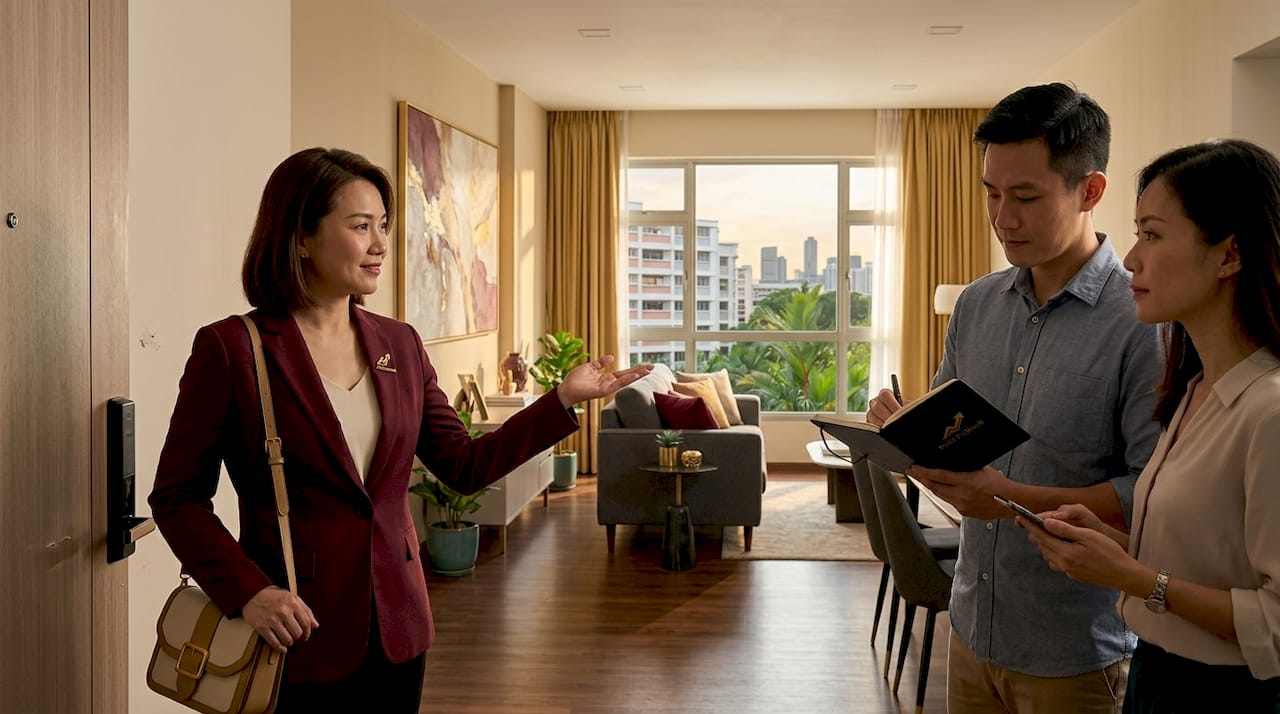
The good news is that commissions in Singapore are negotiable. The less obvious news is that negotiating without a plan can cost you more than you save. Lowering fees often reduces marketing and service scope, so you need to be clear on what you actually need from an agent before you start cutting the rate.
Here’s a structured approach to negotiating or choosing an alternative:
Define what services you need. Do you need professional photography, active buyer sourcing, and full transaction management? Or are you confident handling viewings and offers yourself? Your honest answer determines how much agent support you actually require.
Ask for a service breakdown upfront. Request a written list of exactly what the agent will do for the agreed commission. If they won’t provide specifics, that’s a signal.
Compare the fee against net proceeds. On a S$800,000 property, reducing commission from 2% to 1.5% saves you S$4,000 before GST. That’s real money, but only if the reduced service doesn’t result in a slower sale or a lower offer.
Consider tiered commission structures. Some agents accept a base rate with a bonus if the property sells above a set price. This aligns incentives and gives you cost control without sacrificing the agent’s motivation.
Explore flat fee and no-commission models. Platforms that charge a fixed listing fee let you list your property and manage the sale yourself. This works well for sellers who are comfortable with the process and want to retain full control.
Get everything in writing. CEA guidelines require agents to use standardized estate agency agreements. Review the agreement carefully, especially the commission amount, co-broke terms, and what happens if the property doesn’t sell.
Pro Tip: If you are selling an HDB flat priced above S$600,000 and already have a buyer in mind, a no-commission or flat-fee platform could save you more than S$10,000 compared to a traditional 2% arrangement.
Traditional commissions vs. flat fee vs. no commission
Understanding the differences between these three models helps you pick the one that fits your situation.
Model | Typical cost | Marketing support | Transaction help | Best for |
Traditional % commission | 1–2% + GST | Full (agent-led) | Full | Sellers who want hands-off experience |
Flat fee agent | Fixed rate (e.g., S$688) | Partial or DIY | Basic guidance | Sellers comfortable doing some legwork |
No-commission selling (FSBO) | Minimal or zero | Self-managed | Self-managed | Experienced sellers with a known buyer |
Flat fee models lower cost but can reduce exposure or service compared to traditional agents. That trade-off is real, but it’s also manageable if you’re prepared. Many Singapore sellers use listing platforms to reach buyers directly, then handle negotiations themselves.
No-commission selling carries more responsibility. You manage viewings, offers, and paperwork without a professional buffer. But for sellers who already have a ready buyer or who have sold property before, the savings on HDB commission can be substantial. The real estate commission structure isn’t one-size-fits-all, and knowing your options puts you in control.
My honest take on paying for agent services
I’ve seen sellers negotiate commissions down aggressively, then end up with an agent who did the bare minimum. The listing sat on portals with dark, blurry photos. Viewings were handled without enthusiasm. Offers came in below market, and the seller blamed the market instead of the incentive structure they created.
Here’s what I’ve learned: the commission conversation should start with the agent’s marketing plan, not the percentage. Ask how they plan to price the property, where it will be listed, how they handle viewings, and what comparable sales they used to set expectations. If those answers are vague, no commission rate is the right one.
The sellers who get the best outcomes are the ones who ask direct questions and get direct answers before signing. They treat the estate agency agreement as a contract, not a formality. They also understand that evaluating agent fees means reading the full agreement terms, including co-broke splits and service scope, not just the headline percentage.
My honest opinion? If you have a straightforward property in a high-demand area and you’re willing to put in some effort, a flat fee or no-commission approach can work very well. If you have a complex transaction, a unique property, or no time to manage the process, a full-service agent may justify the cost. The mistake is defaulting to one option without comparing both.
— Brandon
Sell smarter with Pallipallisell
If reading this has you questioning whether a traditional 2% commission is the right choice for your sale, that instinct is worth acting on.
Pallipallisell is built for Singapore homeowners who want to sell their HDB flat or private property without paying hefty commissions. For a flat fee of just S$688, you get a live listing, direct buyer access, and full control over your sale process. No splits. No GST surprises. No percentage tied to your sale price. Check out the affordable HDB selling fees to see exactly what’s included. If you’re thinking about selling your HDB without an agent, the no-agent HDB selling page is a clear starting point. Compare it against the traditional model and decide with the full picture in front of you.
FAQ
What is the typical property agent commission in Singapore?
For HDB resale, sellers typically pay around 2% plus 9% GST, while buyers pay roughly 1% plus GST. On a S$700,000 flat, the seller’s fee reaches approximately S$15,260.
Are property agent commissions fixed by law in Singapore?
No. Commissions are market conventions, not legally mandated. The CEA and COA provide guidelines, but actual rates are negotiable between the seller and agent.
Does GST apply to property agent fees in Singapore?
Yes, if the estate agency is GST-registered, a 9% GST applies on top of the agreed commission amount, which can add thousands of dollars to your total cost.
Can I sell my HDB flat without paying agent commission?
Yes. Platforms like Pallipallisell let you sell your property without agent commission for a low flat fee. It requires more direct involvement from you, but can save you well over S$10,000 on a typical HDB sale.
Why do agent fees feel so high even for straightforward sales?
Because fees are percentage-based, they scale with property prices even when the actual work doesn’t increase proportionally. Commission structures have stayed entrenched despite technology reducing many traditional agent tasks, which is why the gap between effort and pay continues to frustrate sellers.
Recommended


Comments