DIY Property Sale Process Explained for Singapore Homeowners

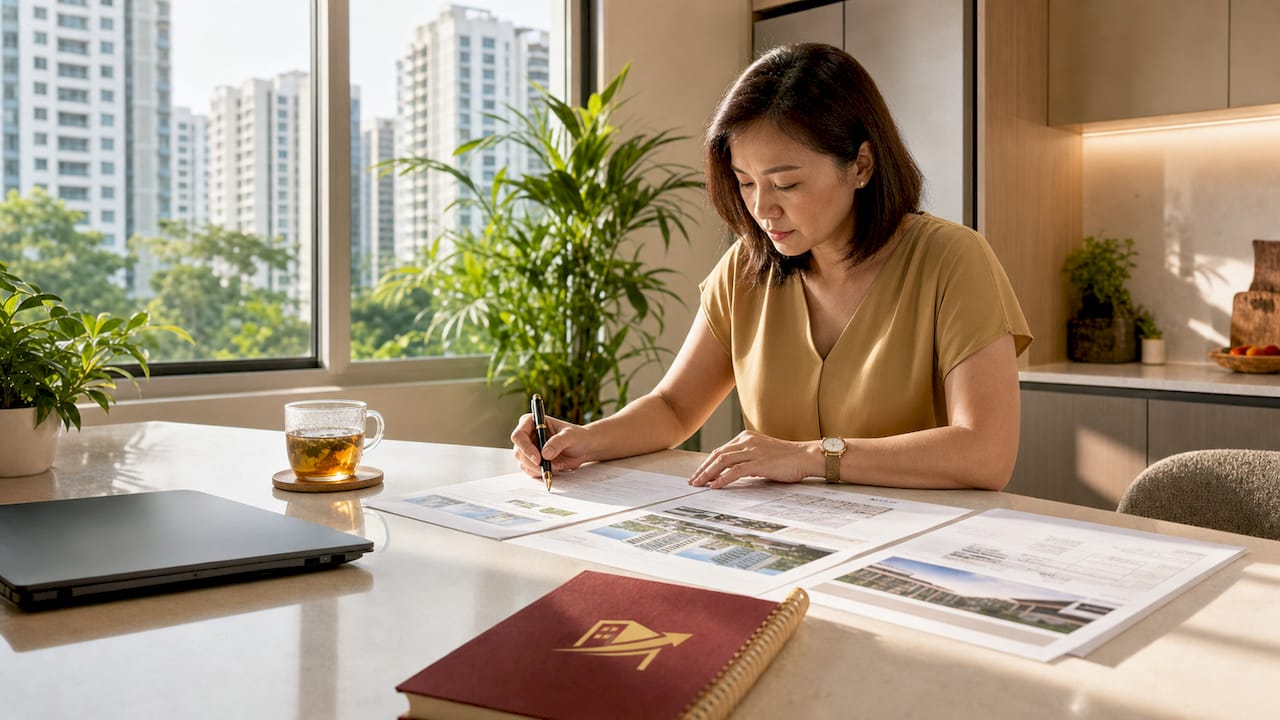
The DIY property sale process is the method by which homeowners sell their properties without a real estate agent, managing pricing, marketing, negotiation, and closing themselves. In Singapore, this approach is known in the industry as FSBO (For Sale By Owner). Sellers who go this route can save the listing agent commission of 1% to 3% of the sale price. On a $600,000 HDB flat, that saving alone can reach $18,000. The tradeoff is real: DIY sellers commit 20–40 hours per transaction. This guide walks you through every stage so you know exactly what to prepare for.
What does the DIY property sale process involve?
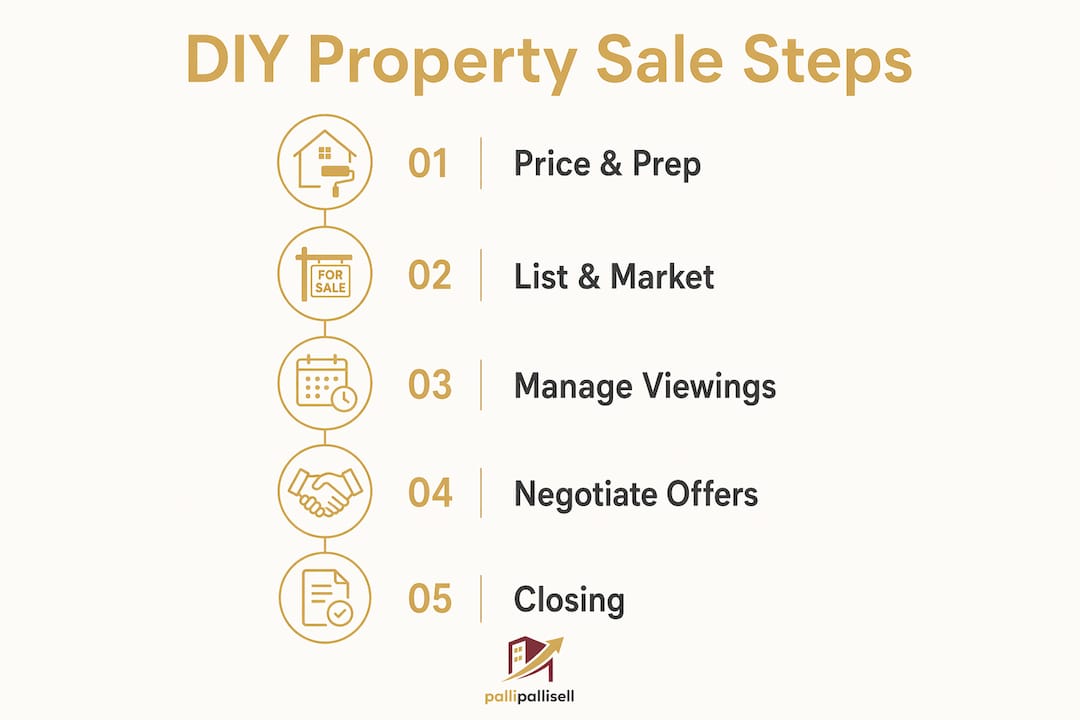
The FSBO process covers five core stages: pricing and preparation, marketing and listing, managing viewings, negotiating offers, and coordinating closing. Each stage requires your direct attention and time. Skipping or rushing any one of them is the most common reason DIY sales fall through. You also need to budget for closing costs, which typically run an additional 1%–3% of the sale price and cover legal fees, title searches, and property taxes. Engaging a solicitor from the start is not optional. It is the single most important legal safeguard in the entire process.
How to price and prepare your property for a successful DIY sale
Pricing is where most FSBO sellers make their first mistake. Set the price too high and buyers skip your listing. Set it too low and you leave money on the table. Start with a competitive market analysis: check recent transaction prices for comparable units in your neighborhood on platforms like HDB Resale Portal or URA’s website. Factor in floor level, facing direction, remaining lease, and proximity to MRT stations.
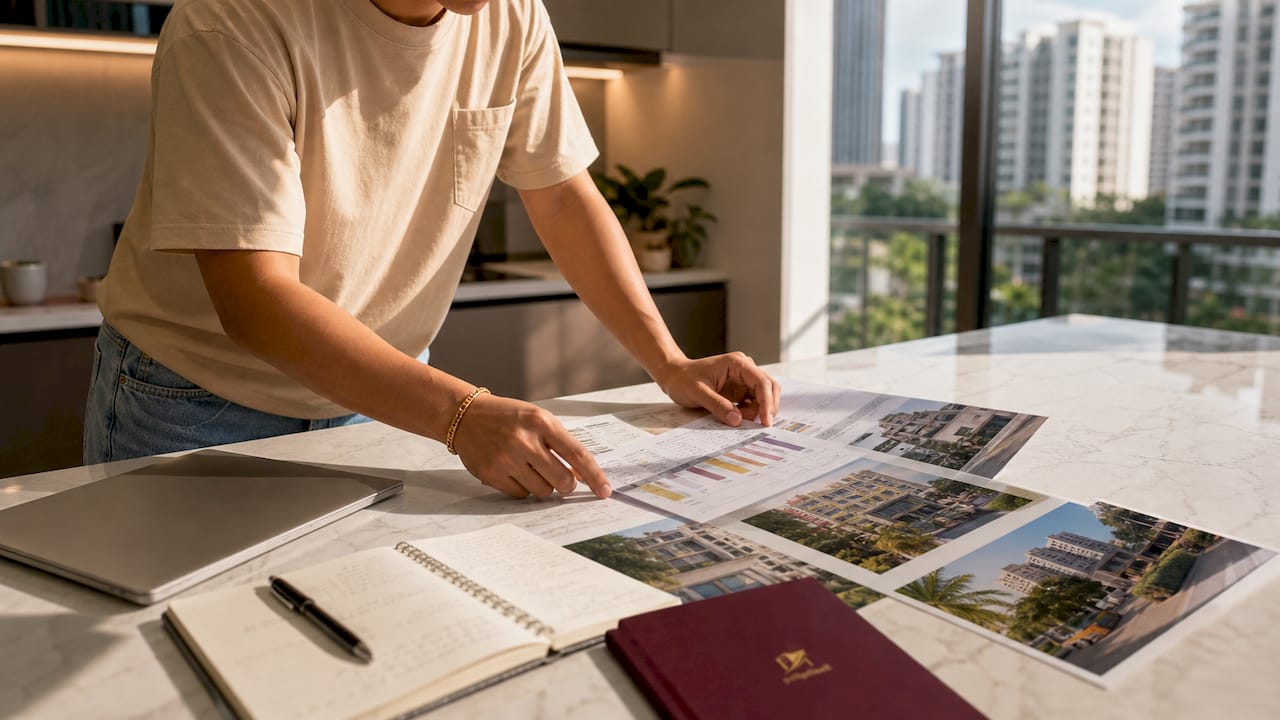
Preparation matters just as much as price. Buyers form opinions within seconds of walking through the door. Clean every room, fix visible defects, and remove personal clutter before any viewing. A well-presented flat signals to buyers that the property has been maintained.
Professional staging and photography cost $500–$2,000 but they directly reduce time on market. High-quality photos drive more clicks on listing portals, which means more viewings, which means faster offers. This is not an area to cut corners.
Preparation investment | Typical cost | Key benefit |
Professional photography | $300–$800 | More listing clicks and faster buyer decisions |
Basic staging or styling | $200–$1,200 | Higher perceived value at viewings |
Minor repairs and touch-ups | $100–$500 | Removes buyer objections before they arise |
Deep cleaning service | $150–$400 | Creates strong first impression |
Pro Tip: Book your photographer on a sunny day and shoot between 10 a.m. and 2 p.m. Natural light makes rooms look larger and more inviting, which directly improves click-through rates on property portals.
How do you market and list your property without an agent?
Listing exposure is the biggest challenge when selling a house without an agent. Flat-fee listing services let you publish your property on major Singapore portals like PropertyGuru and 99.co without paying full agent commission. This gives your listing the same visibility as agent-listed properties at a fraction of the cost.
Digital marketing alone is not enough. Physical yard signs remain one of the most cost-effective DIY marketing tools because many buyers drive through target neighborhoods before searching online. Combining physical signage with digital marketing maximizes local buyer discovery, which is especially relevant in Singapore’s estate-focused market.
Top marketing methods for DIY sellers in Singapore:
PropertyGuru and 99.co listings with professional photos and a clear, accurate description
Facebook Marketplace and community groups for direct buyer outreach at zero cost
WhatsApp broadcast lists to reach your personal network quickly
Physical “For Sale” signs at your block entrance or unit door where permitted
Classified ads on Carousell for additional free exposure
Open house events on weekends to batch viewings and create buyer urgency
Pro Tip: Schedule open houses on Saturday mornings between 10 a.m. and 12 p.m. Buyer attendance peaks during this window in Singapore, and batching viewings creates a sense of competition that supports your asking price.
Steps to negotiate offers and manage buyer interactions professionally
Receiving your first offer is exciting. It is also the moment where emotional decisions cost sellers the most money. Successful DIY sellers treat counteroffers as business transactions, not personal exchanges. Separate your attachment to the property from the numbers on the table.
Managing negotiations objectively helps you achieve better deal terms. Evaluate every offer on four factors: price, contingencies, financing status, and proposed closing timeline. A lower offer with no contingencies and a confirmed HDB loan approval can be worth more than a higher offer with multiple conditions attached.
Follow these steps from offer receipt to acceptance:
Receive the written offer and review all terms, not just the price.
Check buyer financing by requesting proof of HDB loan eligibility or bank approval in principle.
Assess contingencies such as requests for repairs, inclusions, or extended timelines.
Prepare a counteroffer in writing, adjusting price or terms based on your priorities.
Negotiate repair requests after inspection by offering a price reduction instead of completing repairs yourself.
Involve a solicitor to review the Option to Purchase before you sign anything.
Accept in writing once all terms are agreed and both parties have signed the Option to Purchase.
For a deeper breakdown of offer tactics, Pallipallisell’s guide on property sale negotiation covers the full range of counteroffers and buyer psychology.
What does the closing process look like in a DIY sale?
Closing is the most legally complex stage of the FSBO process. Engaging a solicitor to draft or review the Purchase and Sale Agreement is strongly recommended to avoid unenforceable clauses or future disputes. The contract is the most critical document in the entire transaction. One ambiguous clause can lead to costly litigation.
A title search is required to identify any latent liens, easements, or clerical errors that could block the property transfer. Engage your solicitor early to perform this search and clear any issues before you accept an offer. Discovering a title problem at the closing table delays the sale and damages buyer confidence.
Payment security is another area where DIY sellers face real risk. Verify the buyer’s identity with a government-issued photo ID and keep a record of the details. For large transactions, meet the buyer at the bank to witness the issuance of a cashier’s check. This simulates secure escrow without requiring a formal escrow service.
Closing checklist for DIY sellers in Singapore:
Confirm solicitor has reviewed and finalized the Option to Purchase and Sale and Purchase Agreement
Complete the title search and resolve any outstanding liens or encumbrances
Verify buyer identity with government-issued photo ID
Confirm HDB or CPF board approvals are in place where applicable
Arrange secure payment collection at the bank or through your solicitor’s client account
Submit all required documents to HDB or the Singapore Land Authority on time
Collect keys and hand over all access cards, manuals, and warranties on completion day
The typical timeline from offer acceptance to completion in Singapore runs 8–12 weeks for HDB transactions and can extend to 12–16 weeks for private property, depending on financing and legal complexity.
Common pitfalls and how to avoid them in a DIY sale
The most frequent mistake DIY sellers make is underestimating the time and emotional demands of the process. Twenty to forty hours of work per transaction is a realistic estimate. That includes listing management, responding to inquiries, scheduling viewings, and handling paperwork. Plan for this before you start.
Excluding buyer agent commission may reduce your market exposure significantly. Many sellers believe going DIY means paying zero commission. In practice, offering a buyer’s agent commission keeps buyer agents motivated to show your property. Cutting it entirely can reduce the number of viewings you receive.
Pro Tip: Treat earnest money carefully. Request it in the form of a cashier’s check or bank transfer, not cash. Keep it in a separate account and document the receipt in writing. This protects both parties if the deal falls through.
Factor | DIY selling | Agent-assisted selling |
Listing commission saved | 1%–3% of sale price | None saved |
Time investment | 20–40 hours per sale | Minimal for seller |
Legal risk | Higher without solicitor | Lower with agent oversight |
Market exposure | Depends on your effort | Broader through agent network |
Control over process | Full | Shared with agent |
Staying organized is non-negotiable. Keep copies of every document, track all deadlines in a calendar, and respond to buyer inquiries within 24 hours. Slow responses signal disorganization and give buyers reason to walk away.
Key Takeaways
The DIY property sale process saves Singapore homeowners significant commission fees, but it requires thorough preparation, objective negotiation, and proper legal support to succeed.
Point | Details |
Commission savings are real but conditional | Saving 1%–3% in listing commission requires active marketing and legal investment to realize fully. |
Pricing accuracy drives results | Use HDB Resale Portal and URA data to set a competitive price before listing. |
Professional photos reduce time on market | Investing $300–$800 in photography directly increases buyer inquiries and speeds up the sale. |
A solicitor is not optional | Engage a solicitor early for title search, contract review, and payment security. |
Buyer agent commission affects exposure | Excluding it entirely can reduce viewings; factor it into your cost-benefit calculation. |
My honest take on DIY property sales in Singapore
I’ve seen sellers go into FSBO with full confidence and come out frustrated, not because the process is impossible, but because they underestimated two things: the paperwork and the emotional weight of negotiating on their own home.
The savings are real. On a $700,000 flat, keeping 2% in your pocket instead of paying it to an agent is $14,000. That is a meaningful amount. But I’ve also seen sellers lose more than that by accepting a low offer out of fatigue, skipping a title search, or signing an Option to Purchase without legal review.
My recommendation is this: go DIY on the listing and marketing side, where flat-fee platforms like Pallipallisell give you full portal exposure at a fixed cost. But do not go DIY on the legal side. A solicitor reviewing your Sale and Purchase Agreement costs a few hundred dollars. A dispute over an unenforceable clause can cost tens of thousands.
The sellers who do this well treat it like a part-time job for two to three months. They prepare the property properly, price it with data, respond to buyers quickly, and stay objective when offers come in. If you can commit to that, the process is absolutely manageable. If you are hoping to do it casually on the side, the risks outweigh the savings.
— Brandon
Sell your property in Singapore with Pallipallisell
Pallipallisell is built for Singapore homeowners who want to sell their HDB flat or private property without paying full agent commission. The platform charges a fixed fee of $688, giving you direct access to listing tools, buyer inquiries, and support through every stage of the sale.
You get full control over your listing, your viewings, and your negotiation. Pallipallisell handles the platform side so you can focus on closing. For HDB sellers, the sell HDB without agent page outlines exactly how the process works. Check the affordable pricing options to see what you save compared to a traditional agent commission.
FAQ
What is the FSBO property sale process?
FSBO (For Sale By Owner) is the process where a homeowner sells their property without hiring a real estate agent, managing pricing, marketing, negotiation, and closing directly. It saves the listing agent commission, which typically runs 1%–3% of the sale price.
Do I need a solicitor for a DIY property sale in Singapore?
Yes. A solicitor is required to draft or review the Option to Purchase and the Sale and Purchase Agreement. Skipping this step risks unenforceable contract clauses and potential legal disputes.
How long does a DIY property sale take in Singapore?
HDB transactions typically take 8–12 weeks from offer acceptance to completion. Private property sales can take 12–16 weeks depending on financing approvals and legal complexity.
Can I list on PropertyGuru and 99.co without an agent?
Yes. Flat-fee listing services and platforms like Pallipallisell let you publish directly on major Singapore portals without paying full agent commission. This gives your property the same digital exposure as agent-listed units.
What is the biggest risk in a DIY property sale?
The biggest risks are pricing errors, contract mistakes, and payment fraud. Conducting a proper market analysis, engaging a solicitor for contract review, and verifying buyer identity with government-issued ID significantly reduces all three.
Recommended


Comments