Price and Sell Landed Property Yourself in Singapore
- Pallipallisell

- 6 days ago
- 8 min read
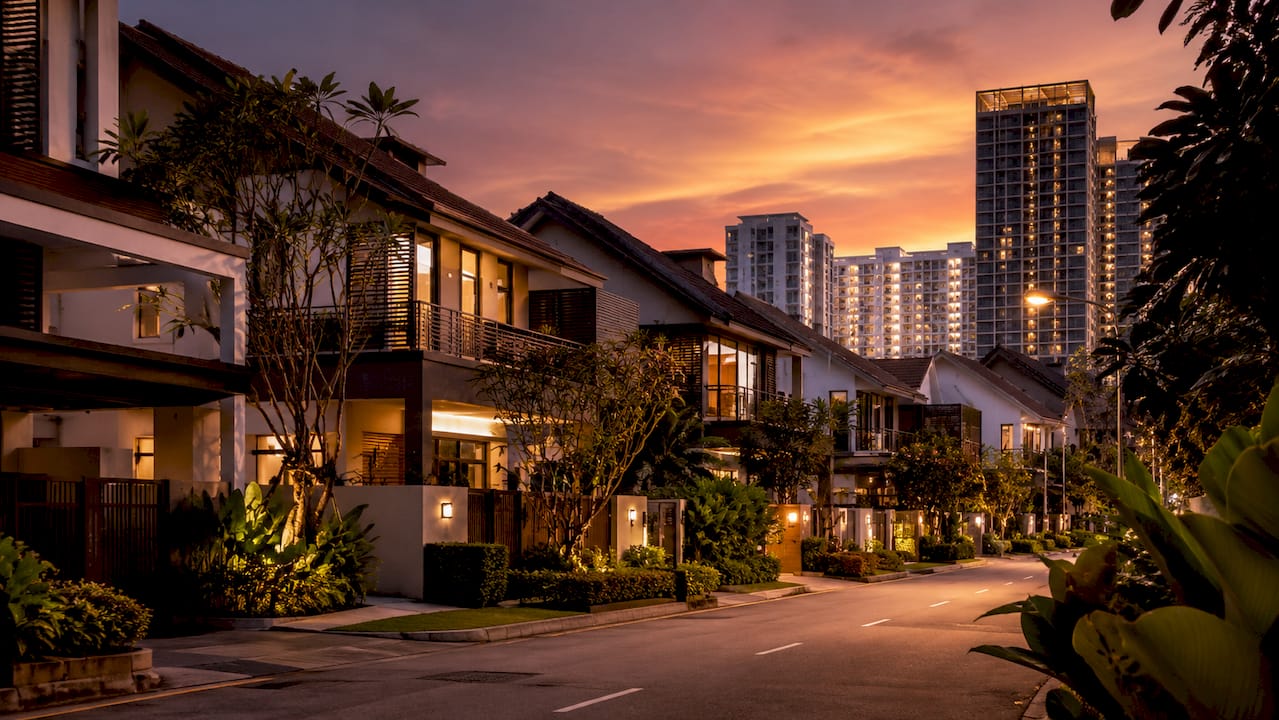
Selling your landed property independently is a proven way to keep tens of thousands of dollars in your pocket. Agent commissions for private landed properties typically run 1–2% of the sale price, which on a $3 million terrace house means $30,000–$60,000 gone before you see a cent. To price and sell landed property yourself, you need three things: a data-driven valuation, a clear marketing plan, and a qualified conveyancing lawyer. Singapore’s landed residential market is tight, with landed homes covering less than 5% of the country’s total land area. That scarcity makes accurate pricing non-negotiable.
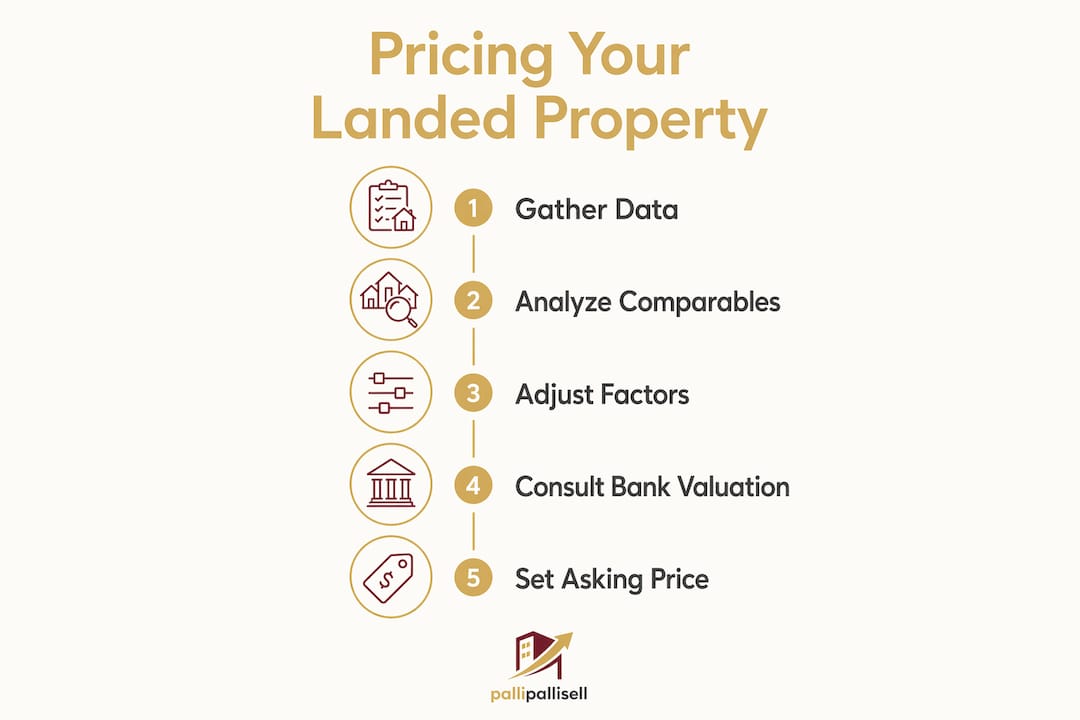
How to accurately price your landed property yourself
The Direct Comparison Method is the standard valuation approach for landed homes in Singapore. It uses recent sales of similar properties, pulled from Urban Redevelopment Authority (URA) caveat data, to establish a price per square foot of land area. You then adjust that baseline up or down based on your property’s specific attributes.
Key factors that affect your adjusted price
Frontage: Wider frontage commands a premium because it signals redevelopment potential and better street presence.
Plot shape: Regular rectangular plots are easier to build on and valued higher than irregular or oddly shaped land.
Orientation: North-south facing homes avoid direct afternoon sun, which buyers in Singapore actively prefer.
Road category: A corner plot on a Category 1 road allows a higher boundary wall and more privacy.
Tenure: Freehold land consistently trades at a premium over 99-year leasehold.
Valuers adjust for these attributes after anchoring to comparable sales. You can replicate this process yourself using URA’s public caveat database, which lists every transacted price, date, and address for private properties.
The Residual Method applies when your land has redevelopment potential. It works backward from the estimated gross development value of a new build, subtracting construction costs, professional fees, and developer profit to arrive at what the land is worth today. This method is more complex, but it gives you a ceiling price if a developer is your likely buyer.

Pro Tip: Request an indicative bank valuation before you set your asking price. Bank valuations shape buyer financing, and a gap between your asking price and the bank’s figure can kill a deal at the OTP stage.
Emotional pricing is the most common mistake independent sellers make. Landed property prices softened 0.4% quarter-on-quarter in Q1 2026. Pricing above market because of sentimental attachment extends your time on the market and signals desperation to serious buyers. Set your price on data, not memory.
Valuation method | Best used when | Key input |
Direct Comparison | Standard residential sale | URA caveat data, adjusted for attributes |
Residual Method | Redevelopment potential land | Gross development value minus costs |
Bank indicative valuation | Pre-OTP price check | Lender’s independent assessment |
Preparing and marketing your property to attract serious buyers
Preparation determines how fast you close and at what price. Buyers of landed homes in Singapore are experienced. They notice deferred maintenance, poor photos, and vague descriptions immediately.
Start with these preparation steps before you list:
Fix visible defects: leaking pipes, cracked tiles, faulty electrical points, and peeling paint.
Clear clutter from every room and the garden. Buyers need to visualize their own furniture.
Gather all documents upfront: title deed, floor plan, property tax statements, and any renovation permits.
Commission professional photos with wide-angle lenses and natural lighting. Shoot at eye level for living spaces and from a high angle for the garden and facade.
Record a short video walkthrough or virtual tour. Buyers who cannot visit in person will shortlist based on video quality alone.
For marketing channels, listing your property online reaches the widest pool of buyers at the lowest cost. Post on major Singapore property portals and share across social media with clear location tags. A physical “For Sale” sign at the gate still works for landed homes because neighbors and passersby are often the first to refer serious buyers.
Common marketing mistakes to avoid:
Writing a description that lists room counts but says nothing about the land size, tenure, or district.
Using dark, blurry photos taken on a phone without staging.
Posting without a floor plan. Buyers will skip your listing.
Pricing without a stated rationale. Buyers assume you are hiding something.
Pro Tip: List on a Thursday or Friday. Buyers browse portals heavily on weekends, and fresh listings get the most views in the first 48 hours.
What are the legal and financial obligations for independent sellers?
The conveyancing process for a landed property sale in Singapore runs 10–12 weeks from OTP exercise to legal completion. That timeline is not flexible. It includes title checks, mortgage redemption, CPF refund coordination, and stamp duty payment. You cannot manage this yourself. Singapore law requires every seller to appoint a licensed law firm, and no individual may conduct their own conveyancing.
Here is the legal process in order:
Appoint your conveyancing lawyer before you issue the OTP. Your lawyer must vet the Option to Purchase terms and run title checks before you sign anything.
Issue the Option to Purchase (OTP). The buyer pays an option fee, typically 1% of the agreed price, to secure the right to buy.
Buyer exercises the OTP within the option period (usually 14 days) and pays the exercise fee, typically 4% of the price.
Conveyancing begins. Your lawyer handles title transfer, mortgage redemption, and CPF refund coordination.
Legal completion. The buyer pays the balance, and ownership transfers. Standard completion runs 8–10 weeks from OTP exercise.
Conflict-of-interest rules in Singapore prohibit a single law firm from representing both the buyer and the seller in the same transaction. You and the buyer must each appoint separate law firms.
Key costs you must budget for:
Conveyancing fees: Legal fees typically range from S$2,500 to S$4,000 for the seller’s side.
Seller’s Stamp Duty (SSD): Applies if you sell within 3 years of purchase. Rates are 12% in year one, 8% in year two, and 4% in year three. No SSD applies after 3 years.
CPF refund: Any CPF used for the purchase must be returned to your CPF account with accrued interest at 2.5% per annum.
Mortgage early repayment penalty: If your loan is within its lock-in period, expect a penalty of 0.75–1.5% of the outstanding loan amount.
Check your hidden transaction costs before you set a net proceeds target. Many sellers are surprised by the CPF accrued interest figure, which can be substantial on a long-held property.
Managing offers, negotiations, and closing without an agent
Evaluating an offer goes beyond the headline price. Look at the buyer’s financing status, proposed completion timeline, and any conditions attached. A lower offer from a cash buyer with no conditions is often worth more than a higher offer contingent on the buyer selling their own property first.
Buyers typically engage agents even when you sell independently. Be prepared for the buyer’s agent to request that you cover part of their commission during negotiations. This is a market norm, not a legal obligation. Decide your position on this before you enter any negotiation, and factor it into your net proceeds calculation.
Follow this sequence from offer to closing:
Receive and review the offer in writing. Confirm the buyer’s financing and timeline.
Negotiate price and terms directly. Keep all communication in writing, whether by email or messaging app.
Agree on terms and issue the OTP through your lawyer.
Buyer exercises the OTP and pays the exercise fee.
Your lawyer and the buyer’s lawyer coordinate title transfer and financial settlement.
Complete the sale and receive net proceeds after mortgage redemption and CPF refund.
During buyer due diligence, expect requests for floor plans, renovation permits, property tax receipts, and utility bills. Prepare these in advance. Delays in producing documents slow the process and erode buyer confidence.
Pro Tip: Create a shared folder with all property documents and share it with serious buyers immediately after they express interest. Organized sellers close faster because buyers feel confident about what they are buying.
Key documents to have ready before you accept any offer:
Title deed or certificate of title
Latest property tax bill
Approved building plans and renovation permits
Tenancy agreements (if the property is tenanted)
Mortgage redemption statement from your bank
Key Takeaways
Selling your landed property independently saves significant commission costs, but success depends on accurate pricing, legal compliance, and direct negotiation skills.
Point | Details |
Use data-driven pricing | Apply the Direct Comparison Method with URA caveat data and adjust for frontage, shape, and orientation. |
Get a bank valuation early | An indicative bank valuation prevents financing gaps that can collapse a deal at the OTP stage. |
Appoint a lawyer before the OTP | Singapore law requires a licensed conveyancing firm; appoint yours before issuing any Option to Purchase. |
Budget all selling costs | Factor in SSD, CPF accrued interest, legal fees, and any mortgage early repayment penalty before setting your net target. |
Prepare for buyer agent commissions | Buyers often use agents even in direct sales; decide your commission position before negotiations begin. |
The real cost of getting this wrong
I have seen sellers price their landed home based on what a neighbor got two years ago, list it with phone photos, and then wonder why they had no serious inquiries after six weeks. The landed market in Singapore is thin. Annual transactions are limited, and every week on the market at the wrong price signals weakness to buyers who track these listings closely.
The legal side is where I see the most costly mistakes. Sellers who issue an OTP before appointing a lawyer, or who do not understand the SSD implications of their holding period, create problems that are expensive to fix. The commission savings are real and worth pursuing. But they are only worth it if you go in prepared.
My honest advice: do the pricing work yourself using URA data, hire a good conveyancing lawyer early, and use a flat-fee platform to handle your listing and buyer inquiries. You do not need a full-service agent. You do need accurate information and the right legal support. The sellers who succeed at managing their own real estate sale are not the ones who cut every corner. They are the ones who cut the right corner, which is the commission, while getting everything else right.
— Brandon
Pallipallisell for independent landed property sellers
Pallipallisell is built for Singapore homeowners who want to sell without paying a full agent commission. The platform charges a flat fee of $688, compared to the $30,000–$60,000 a traditional agent takes on a $3 million landed home.
You get a live property listing with direct buyer inquiries routed to you, full control over negotiations, and access to guidance on pricing and documentation. For sellers who want to list their property and reach buyers directly, Pallipallisell removes the cost barrier without removing your control. Check the flat-fee pricing page to see exactly what you pay and what you get.
FAQ
What is the Direct Comparison Method for landed property?
The Direct Comparison Method uses recent sales of similar landed properties from URA caveat data to establish a price per square foot. Valuers then adjust that figure up or down based on attributes like frontage, plot shape, and orientation.
How long does a landed property sale take in Singapore?
The full process runs 10–12 weeks from the time the buyer exercises the Option to Purchase to legal completion. This timeline covers title checks, mortgage redemption, and CPF refund coordination.
Do I have to pay Seller’s Stamp Duty if I sell myself?
Yes. SSD applies based on your holding period, not how you sell. Rates are 12% in year one, 8% in year two, and 4% in year three. No SSD applies if you have held the property for more than 3 years.
Can I handle conveyancing myself to save more money?
No. Singapore law requires every seller to appoint a licensed law firm for conveyancing. The same firm cannot represent both buyer and seller, so each party must engage separate legal counsel.
Do buyers expect me to pay their agent’s commission?
Buyers often engage agents even when you sell independently, and their agents may request that you cover part of their commission during negotiations. This is a market norm, not a legal requirement, so you can negotiate the terms directly.
Recommended

Comments