What Drives Agent Commission Costs for Singapore Sellers
- Pallipallisell

- Jun 9
- 8 min read

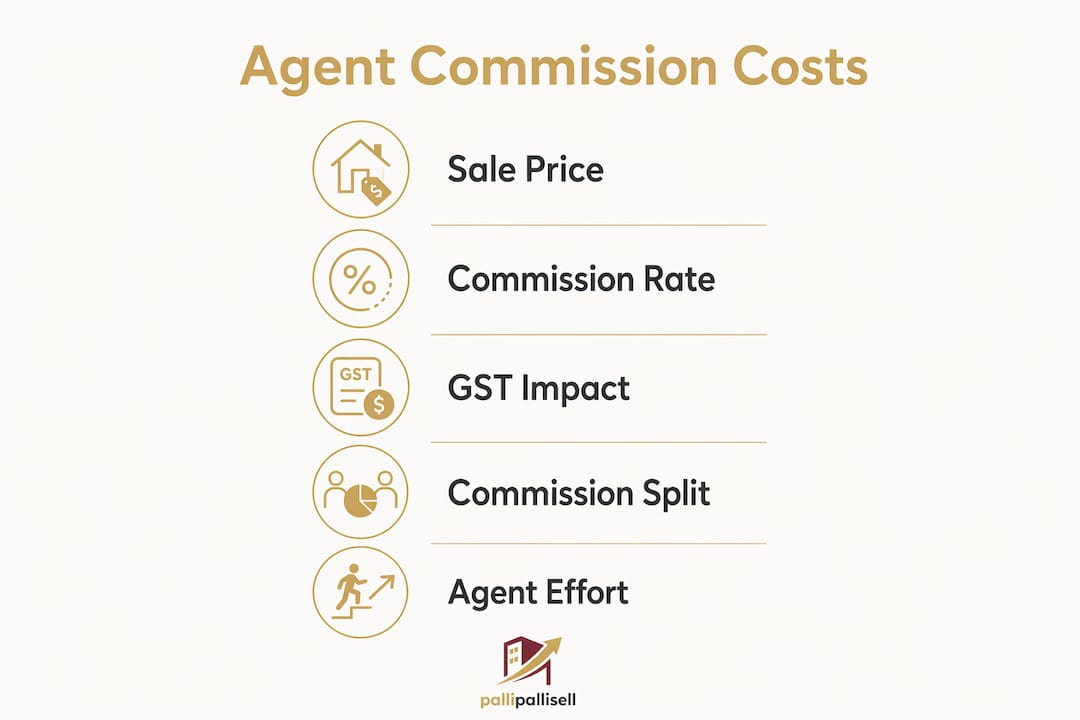
Agent commission costs are the fees you pay a real estate agent to sell your property, calculated as a percentage of the final sale price. In Singapore’s resale market, what drives agent commission costs comes down to three core factors: the transaction value, the complexity of the sale, and how the commission is divided between agents and brokerages. Add GST on top, and the total can reach tens of thousands of dollars on a single HDB transaction. Understanding each driver puts you in a stronger position to negotiate, budget accurately, and decide whether a traditional agent is even the right choice for your sale.
What drives agent commission costs in Singapore property sales
The most direct factor is your property’s sale price. Seller-side commission in Singapore’s HDB resale market is typically around 2% of the sale price before GST. That percentage sounds modest, but it scales fast. On a S$600,000 resale flat, 2% equals S$12,000 before any additional charges. On a S$900,000 flat, the same rate becomes S$18,000. This is why transaction value is the single largest determinant of your total commission bill.
The buyer’s agent also charges a fee. The co-broke commission split typically divides the seller-side 2% equally, with 1% going to the listing agent and 1% to the buyer’s agent. The buyer pays their agent’s 1% separately, but total commissions across both sides can reach around 3% of the transaction value. Knowing this helps you understand why some agents push for higher sale prices. Their earnings move in direct proportion to yours.

GST adds another layer. If your agent or their agency is GST-registered, 9% GST applies on top of the commission amount. On a 2% commission for a S$700,000 sale, that adds S$1,260, bringing the total to S$15,260. GST is not absorbed by the agent. You pay it.
Sale Price | 2% Commission | GST (9%) | Total Payable |
S$500,000 | S$10,000 | S$900 | S$10,900 |
S$600,000 | S$12,000 | S$1,080 | S$13,080 |
S$700,000 | S$14,000 | S$1,260 | S$15,260 |
S$900,000 | S$18,000 | S$1,620 | S$19,620 |
Pro Tip: Always ask your agent upfront whether they are GST-registered. This single question can change your total commission cost by nearly 10%.
How agent effort and transaction complexity affect commission rates
Transaction value explains the base cost, but effort explains the variation. Commission rates increase when agents must invest more work per closing, including extended marketing periods, more viewings, and longer negotiation cycles. A property that sells in two weeks requires far less agent time than one that sits on the market for three months. Agents price that difference into their commission expectations.
Several factors raise the perceived complexity of your sale:
Property condition. A unit that needs repairs or staging requires more marketing effort and more time managing buyer objections.
Pricing accuracy. An overpriced listing extends the sales cycle. Agents know this and factor the risk into their rate.
Documentation readiness. Missing CPF statements, outstanding loans, or incomplete HDB paperwork slow the process and add agent workload.
Negotiation difficulty. Sellers who are inflexible on price or terms create more back-and-forth, which costs the agent time.
Unique property features. Unusual floor plans, high floors, or niche locations require more targeted marketing and a longer buyer search.
The practical implication is clear. Reducing agent workload by preparing your property and pricing it realistically strengthens your bargaining power for a lower commission rate or a performance-based structure. Sellers who walk into a commission negotiation with organized documents, a clean unit, and a market-aligned asking price are in a fundamentally different position than those who hand the agent a problem to solve.
Pro Tip: Prepare your HDB resale checklist, get a professional valuation, and declutter before meeting any agent. You lower their workload before the conversation starts, which gives you a credible reason to ask for a reduced rate.
How commission splits between agents and brokerages shape your costs
The commission you pay does not all go to the agent you meet. Multi-layered commission splits among brokerages and agents influence the portion each party receives, and that split directly affects agent motivation and your negotiation leverage.
Here is how the structure typically works in Singapore. You pay the listing agent a commission. That agent belongs to a brokerage, which takes a percentage of the agent’s earnings as a desk fee or split arrangement. The listing agent may also share part of their commission with a co-broke agent representing the buyer. By the time the money moves through the chain, the individual agent’s take-home can be significantly less than the headline rate you agreed to.
Commission model | Who pays | Agent take-home | Seller impact |
Standard 2% seller-side | Seller | Partial, after brokerage split | Full 2% + GST out of pocket |
Co-broke 1% + 1% | Seller pays 1%, buyer pays 1% | Reduced per agent | Lower seller-side cost if structured correctly |
Flat fee arrangement | Seller pays fixed amount | Fixed, no percentage | Predictable cost regardless of sale price |
Performance-based | Seller pays on results | Tied to sale outcome | Aligns agent incentive with seller goal |
Understanding this split structure matters for two reasons. First, negotiating the split of the seller-side commission can reduce your effective cost if documented properly. Second, an agent who retains a smaller share after brokerage deductions may have less financial incentive to push hard for your best price. Ask your agent directly what percentage they keep. The answer tells you a lot about how motivated they will be on your behalf.
Always get the commission split terms in writing. A verbal agreement about who gets what is not enforceable and creates room for disputes at closing.
How GST and CEA guidelines affect your total commission in 2026
The Council for Estate Agencies, known as CEA, sets the regulatory framework for property transactions in Singapore. Commission rates are not fixed by law. They are negotiated case by case, guided by CEA’s Commission on Agency conventions. Two sellers with identical properties can pay different rates depending on service scope and how well they negotiate. This is a critical point that many sellers miss. The 2% figure is a benchmark, not a ceiling or a floor.
What CEA does require is transparency. Agents must disclose all fees in writing before you sign anything. The key regulatory requirements that protect you include:
Written estate agency agreement. This document must specify the commission amount, the scope of services, and the duration of the engagement.
GST disclosure. If the agent or agency is GST-registered, the invoice must clearly show the GST amount as a separate line item.
No undisclosed dual representation. An agent cannot represent both buyer and seller in the same transaction without written consent from both parties.
Fee transparency. No hidden charges or last-minute additions are permitted under CEA guidelines.
Written contracts avoid last-minute changes and undisclosed fees. Request a proper tax invoice that separates the commission from GST. If an agent resists putting the full fee structure in writing, treat that as a warning sign. Clarity on paper protects you at every stage of the transaction.
Effective strategies to negotiate and lower your commission costs
Negotiation is not confrontational. It is a structured conversation about value. These steps give you a clear path to reducing what you pay without sacrificing the quality of your sale.
Start with the property value. Higher-priced properties give you more leverage. On a S$900,000 flat, even a 0.25% reduction saves you S$2,250. Make the math visible in the conversation.
Prepare before you negotiate. Organize your HDB documents, get a valuation, and price your property accurately. Reducing the agent’s expected work is the most credible basis for asking for a lower rate.
Ask about flat fee options. Some agents offer fixed-fee arrangements that cost less than percentage-based commissions on higher-value properties. Explore this before committing to a percentage.
Clarify the co-broke arrangement. Confirm in writing whether the 2% you pay covers both agents or just the listing agent. Misunderstanding this is one of the most common sources of unexpected costs.
Insist on a written agreement. Discussing fees upfront and insisting on written agreements prevents surprises. Include the commission rate, GST status, split structure, and service scope.
Evaluate the marketing plan. Ask the agent to show you their specific marketing strategy for your property. A detailed plan justifies their fee. A vague answer does not.
Consider exclusive versus non-exclusive listings. Exclusive listings often come with lower commission rates because the agent has guaranteed income from your sale. Non-exclusive arrangements may cost more per agent since each one carries more risk.
Pro Tip: Ask every agent you interview: “What is your commission split with your brokerage?” Agents who answer clearly and confidently are easier to work with. Those who deflect the question may have less room to negotiate on your behalf.
Key takeaways
Agent commission costs in Singapore are driven by sale price, agent effort, commission split structures, and GST, and understanding each factor gives you real leverage to reduce what you pay.
Point | Details |
Sale price sets the base cost | A 2% rate on S$700,000 equals S$14,000 before GST, so higher-value properties amplify every percentage point. |
GST adds 9% on top | Confirm your agent’s GST status before signing, as this adds nearly 10% to your total commission bill. |
Effort and complexity drive rate variation | Preparing documents and pricing accurately reduces agent workload and strengthens your case for a lower rate. |
Commission splits affect agent motivation | Ask what percentage your agent retains after brokerage deductions to gauge their incentive to perform. |
Written agreements protect you | CEA requires fee transparency in writing. Never proceed without a signed estate agency agreement. |
What I’ve learned about commission negotiations in Singapore’s resale market
Brandon here. After watching hundreds of property transactions in Singapore, the single biggest mistake sellers make is treating commission as a fixed cost. It is not. Commission rates are negotiated on a case-by-case basis, and sellers who understand that walk away paying less.
The second thing I have noticed is that most sellers focus on the percentage and ignore the split. Knowing that your agent keeps only 60% of what you pay, after brokerage deductions, changes how you read their motivation. A well-motivated agent who retains a fair share of the commission will work harder for your price. A resentful agent squeezed by their brokerage will not.
My honest advice: prepare your property, price it right, and have the commission conversation before you sign anything. Sellers who do this consistently get better rates and better service. Those who sign first and negotiate later rarely win. Transparency is not just a nice-to-have. It is the foundation of every productive seller-agent relationship.
— Brandon
Sell smarter with Pallipallisell
If traditional agent commissions feel like too high a price to pay, you have a direct alternative. Pallipallisell is built for Singapore property sellers who want full control over their sale without paying percentage-based fees. Instead of S$12,000 to S$19,000 in commissions, you pay a low fixed fee of S$688. You list your property, communicate directly with buyers, negotiate on your own terms, and close with complete visibility at every step.
Pallipallisell gives you the tools to sell your HDB without an agent and keep the savings in your pocket. If you want to see what transparent, cost-effective property selling looks like in practice, start with the pricing page and compare it against what a traditional agent would charge you on your specific sale price.
FAQ
What is the standard agent commission rate for HDB resale in Singapore?
The standard seller-side commission is around 2% of the sale price before GST. For a S$600,000 flat, that equals S$12,000, with GST added on top if the agent is GST-registered.
How is GST applied to agent commission costs?
GST at 9% is charged on top of the commission amount when the agent or their agency is GST-registered. It is not absorbed by the agent, so you pay the full additional amount.
Can I negotiate my agent’s commission rate in Singapore?
Yes. Commission rates are not fixed by law and are negotiated case by case under CEA guidelines. Sellers who prepare their property and reduce agent workload have the strongest basis for negotiating a lower rate.
What is a co-broke commission split and how does it affect me?
A co-broke split divides the seller-side 2% commission equally between the listing agent and the buyer’s agent at 1% each. The buyer pays their agent’s 1% separately, but understanding this structure helps you clarify exactly what you owe and to whom.
What should a written estate agency agreement include?
It must specify the commission rate, GST status, scope of services, duration of the engagement, and the commission split structure. CEA requires this documentation, and you should never proceed without it.
Recommended

Comments